
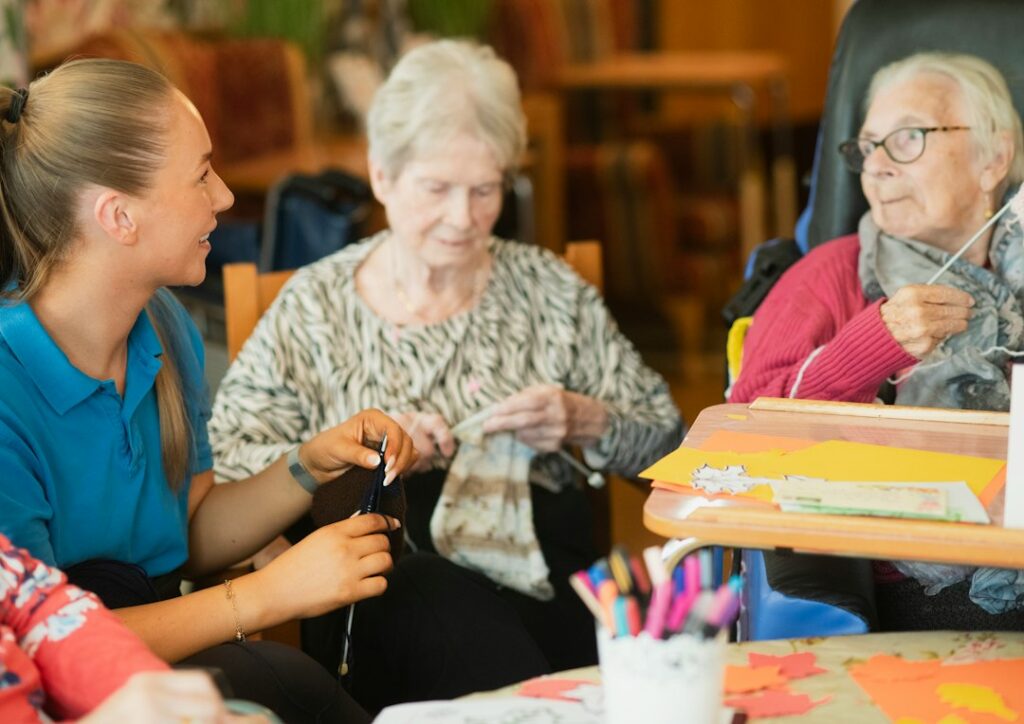
Creative activities are more than entertainment in assisted living. Drawing, music, storytelling, gardening, crafts, cooking, and other forms of expression can support identity, social connection, confidence, and emotional well-being. For residents of Mount Carmel, PA, creative opportunities can also reflect familiar seasonal traditions, family histories, and the everyday character of the surrounding community.
Why does creativity matter for older adults?
Creativity gives residents a way to make choices, express feelings, and remain connected to parts of life that existed before assisted living. A person does not need formal artistic training to benefit. The process of choosing colors, arranging flowers, singing a familiar song, or sharing a memory can be meaningful on its own.
Creative activities may help residents:
- Maintain a sense of independence and personal identity
- Practice hand coordination and other everyday skills
- Reduce boredom and increase interest in daily routines
- Build friendships through shared projects
- Recall family traditions, work experiences, and important life events
- Communicate when conversation is difficult
- Experience accomplishment without competition
Creativity should not be treated as a test of talent. A finished project is less important than the opportunity to participate at a comfortable pace.
What types of creative activities work well in assisted living?
A varied program gives residents more ways to find something enjoyable. Activities should include options for people with different abilities, interests, cultural backgrounds, and levels of previous experience.
Common choices include:
- Watercolor painting, colored pencils, large-print coloring, or simple collage work
- Knitting, sewing, weaving, folding, or other familiar handcrafts
- Singing, listening to favorite music, rhythm activities, or playing simple instruments
- Poetry, journaling, oral storytelling, and recording family memories
- Arranging flowers, caring for indoor plants, or starting small seasonal gardens
- Decorating cookies, assembling simple recipes, or discussing traditional foods
- Photography, postcard-making, holiday decorations, and nature observations
- Group projects such as murals, memory books, quilts, or community displays
For residents with limited vision, larger materials, strong color contrast, raised textures, and good lighting can make participation easier. People with arthritis may prefer lightweight tools, larger handles, soft materials, or activities that do not require prolonged gripping.
How can activities be adapted for memory loss?
Residents living with dementia or other memory changes can often enjoy creative activities when instructions are simple and the setting is calm. The activity should focus on comfort and engagement rather than accuracy.
Helpful approaches include:
- Presenting one or two choices instead of a large selection
- Demonstrating each step rather than relying on written directions
- Using familiar songs, household objects, photographs, or seasonal materials
- Keeping projects short and allowing breaks
- Avoiding corrections when a resident uses materials differently than expected
- Praising effort, interest, or personal expression instead of the finished result
A resident may not remember making a painting but can still experience pleasure while selecting colors or moving a brush. Familiar music may also encourage movement, conversation, or emotional connection even when other communication becomes difficult.
How can creativity reflect life in Mount Carmel?
Local familiarity can make activities feel more personal. Seasonal changes, older housing patterns, family gatherings, religious traditions, school memories, and work histories may all provide useful themes without requiring a resident to be an artist.
For example, a group might create:
- A winter collage using snow, evergreen, and household images
- A memory board about preparing family meals or preserving food
- A spring planting project with herbs grown in containers
- A collection of stories about school days, neighborhood celebrations, or former jobs
- A fall display based on leaves, harvest colors, and family traditions
In a community where winter weather can limit outdoor time, indoor creative projects may be especially useful during colder months. Natural light, safe indoor gardening, music, and seasonal decorating can help reduce the feeling that the day has become repetitive.
Local relevance does not require using only local landmarks or historical facts. Asking residents what places, routines, sounds, foods, and traditions feel familiar is often more valuable than choosing a theme for them.
What makes a creative program inclusive?
An inclusive activity is flexible enough for residents to participate in different ways. One person may paint, another may sort materials, and another may simply listen to music and offer suggestions. Each form of involvement can count as participation.
Programs work better when they:
- Offer seated and standing options
- Provide quiet spaces for residents who become overwhelmed in groups
- Use plain instructions and demonstrate unfamiliar tasks
- Allow residents to stop without embarrassment
- Include adaptations for hearing, vision, mobility, and memory changes
- Avoid assuming that every resident enjoys traditionally “craft-based” activities
- Invite men and women alike to explore music, tools, storytelling, food, and visual arts
- Display work only with the resident’s permission

Some residents may prefer practical creativity, such as arranging a toolbox, organizing photographs, repairing simple objects under supervision, or discussing how something was made. Creativity is broader than painting and crafts.
Should family members participate?
Family participation can add meaning when it follows the resident’s preferences. A daughter might bring copies of family photographs, a grandchild might record a story, or a relative might join a music session. These activities can help relatives learn more about a resident’s past while giving the resident a familiar role.
Family members should avoid taking over the project. Helpful participation may involve asking open questions, listening to stories, or handling materials that are difficult to use. It is usually better to ask, “Which color would you like?” than to decide what the project should look like.
Personal items should be labeled and stored safely. Materials that could be swallowed, spilled, or misused require appropriate supervision, especially for residents with cognitive or physical impairments.
How can staff tell whether an activity is working?
The most useful signs are often behavioral rather than artistic. A resident may appear more alert, initiate conversation, remain engaged longer, or show interest in returning to the activity. Another person may become calmer while listening to music or more willing to interact with others.
An activity may need adjustment if residents:
- Leave quickly or seem confused by the instructions
- Become frustrated by difficult tools or too many steps
- Cannot hear or see the demonstration
- Feel pressured to finish
- Are excluded by the pace or physical setup
Participation can also be quiet. Watching, choosing materials, sharing an opinion, or remembering a related experience may show that the activity has meaning.
What should residents and families ask about creative opportunities?
Questions can help reveal whether activities are genuinely resident-centered:
- Are residents asked what they want to do?
- Are there choices for people who do not enjoy crafts?
- Can activities be adapted for arthritis, vision loss, hearing loss, or memory changes?
- Are music, storytelling, cooking, gardening, and cultural traditions included?
- Can residents participate without completing a project?
- Are personal creations displayed only with permission?
- Are seasonal activities available during periods when outdoor time is limited?
A strong creative program does not need expensive supplies or complicated projects. It needs flexibility, respect, suitable adaptations, and regular opportunities for residents to make meaningful choices.
